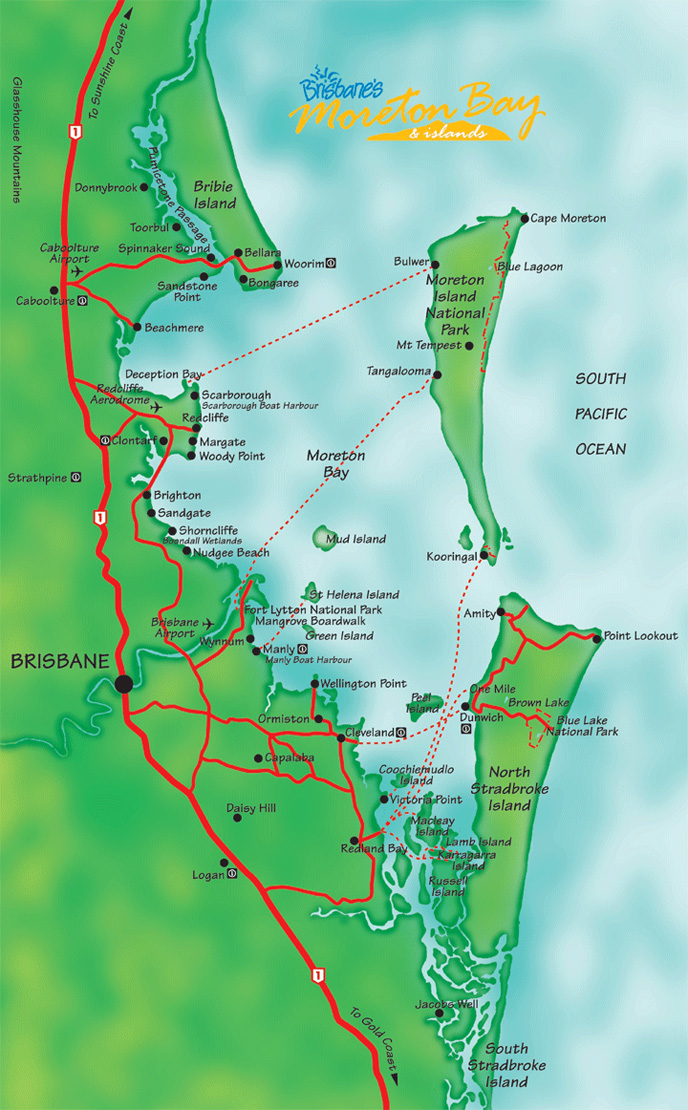
Earlier this year I had lunch with Judy, Wayne and Peter, old friends from my days in Rockhampton in the 1970s.
One of them mentioned his visits to nearby Coochiemudlo Island – a place I had never heard of. This inspired me to spend a few days and many kilometres on the road and many more hours on boats and ferries and barges to discover more about Brisbane’s marvellous islands.
Naming the parts
The Philippines has over 7600 islands. Thailand has about 1430. Scattered through Moreton Bay, offshore from Brisbane, are about 360 islands. Some are inhabited; some are just blobs of mud and sand and mangroves and discarded plastic bottles and Woolworths’ shopping bags.
The world’s four largest sand islands are found here: K’gari (Fraser) Island (1600 km2), Stradbroke Island (275 km2), Moreton Island (186 km2) and Bribie Island (148 km2). How anyone has managed to build resorts or townships on these places is remarkable as their composition is about 98% sand and 2% rock.
- Didn’t anyone tell them about the three little pigs …?
There is Gibson Island and Whyte Island, Fisherman, St Helena, Green, Moreton and Peel Islands. We have North (and South) Stradbroke Islands, Little Goat and Mud Islands, Macleay, Russell, Snipe, Garden, Lamb, Perulpa, Pannikan, Karragarra (apparently the best little slice of sand to live on), Long and Short Islands, and Lagoon, Cobby Cobby and Mosquito Islands. Tabby Tabby, Eden, Boonnahbah, Woogoompah, Coomera, Dinner are all there along with scores of un-named islands – at least, un-named by the European invaders who made the maps.
- I am not sure that I would like to live on Cobby Cobby or Mosquito Island, but perhaps Lamb and Dinner Islands would prove appetising enough if there was a good dollop of mint sauce
As travellers island-hop on ferries from the mainland to these places and to each other, cormorants and other birds perch on navigation markers, swooping down to breeze across wave tops and to plunge into the ocean for breakfasts on the fin.
Whaling and Parasailing
About seventy years ago I travelled with my parents to Moreton Island. We weren’t going on a holiday and there was no resort there. We went there to see giant humpback whales being slaughtered.
This excursion was one of many we went on. Others – less bloody – were to the Arnott’s Biscuit Factory, the Golden Circle pineapple cannery and to the Paul’s Ice Cream factory. This was not, perhaps, the Grand Tour that rich young Europeans enjoyed during the Golden Era of the 1920s and 1930s … but it was, then, a chance for country kids like me to see what happened out there in the real world.
Tangalooma Whaling Station, on Moreton Island, was where over 6200 humpback whales were processed after having been slaughtered by harpoons equipped with lethal grenades.
An ironically cheerful 1965 film made by TV’s Channel 7 told viewers at Tangalooma’s Whaling Station Tour that the whales’ death was instantaneous and that the beasts did not suffer. However, a local Marine Ranger told me that the harpoonists were occasionally poor good shots … and that several harpoons and several grenades were necessary … and that it may have taken as long as five or six hours for the whale to die … while the oceans around them became blood-stained, Macbeth incarnadined.
At Tangalooma, whalers used wicked long flensing knives to carve giant slabs of blubber off the carcasses. The slabs were fed into the boilers below the flensing deck to be cooked and processed into oils for the cosmetic industry, and to make margarine, paint and pharmaceuticals. The rigid baleens were used to make umbrellas and women’s corsets.
- Yes! A woman’s eighteen-inch waist was certainly worth the slaughter of a 30,000 kg animal that may have lived for ninety years … had it not become merely a source for fashion accessories …
Seventy years later, I can still recall the chunks of blubber peeling off … and I can still smell the horrific stench of the fats being boiled down.
- During its ten years of existence, the whaling operations at Tangalooma and elsewhere reduced an estimated local population of 40,000 humpback whales to just 300 …
Today’s Tangalooma Resort has kept the concrete slab that was the flensing deck … but other than that and the 1965 film, little remains of this horrific industry and I doubt that many visitors know about – or care about – the carnage that happened there in the 1950s and 1960s.
Whaling has been banned since 1965.
Visitors to this lovely island – now home to a comfortable resort and many private houses – can line up in the chilly waters at sunset to hand-feed the wild dolphins that visit every day. This is a rather nice irony – humans feeding the fish instead of slaughtering them. I don’t know if humans have trained the bottle nosed dolphins to come in for their fish suppers … or if the fish have trained us to be a dive-in fresh fish market.

We lined up in queues then moved down to select a fish that we were told to hold “like an ice cream cone”. With all of us lined up holding small fish by the tail, I rather imagined Monty Python would come jumping out from behind the sand dunes to get us all to join in a very silly fish-slapping dance.
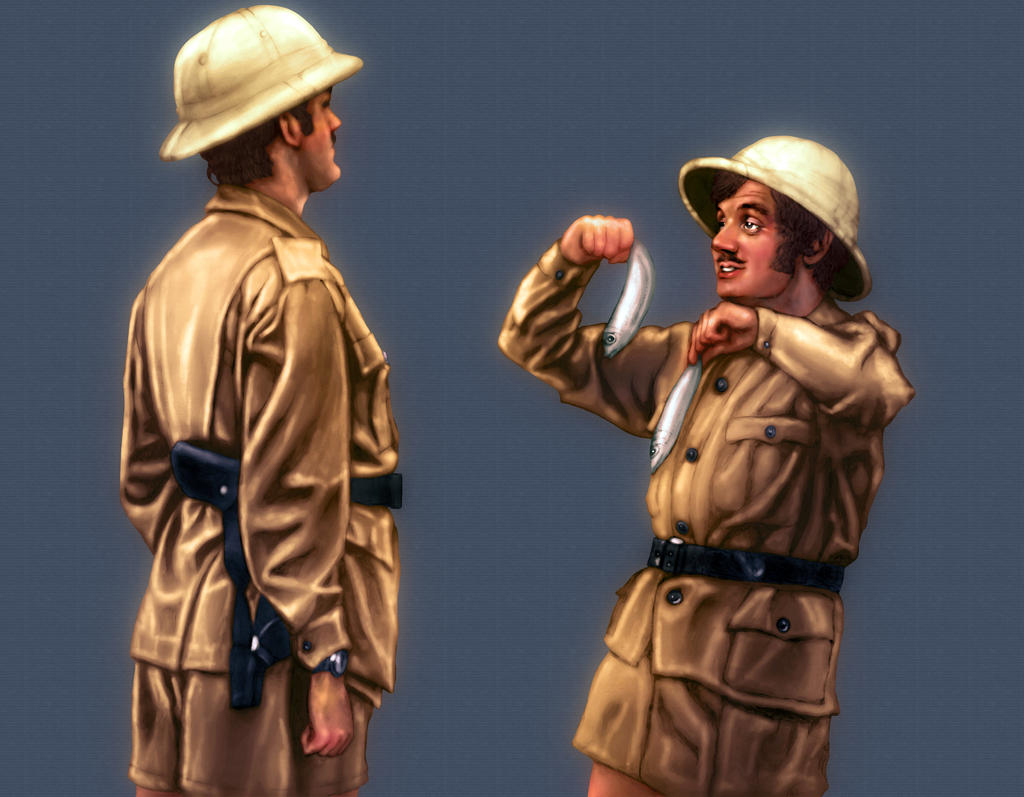
I came close and personal with Echo, a 31-year old male. As I paddled back to the shore a woman waiting to give Eric his next titbit asked:
- Was it a life-changing experience?
I wasn’t sure how to respond … and suggested that after she had fed the fish, she should count her fingers as I had seen that Echo had quite a lot of sharp-looking teeth. On reflection, I suppose it was a unique experience to have that one-one experience – as brief and as limited as it was – with a wild 700-kilogram beast. Perhaps I should have asked Echo:
- Was it good for you, too …?
If hand-feeding dolphins does not appeal, today’s Tangalooma offers parasailing, banana boats, glass-bottomed kayaks, fishing tours, scuba diving over a series of old shipwrecks, four-wheel drive tours of the more remote sandy beaches, helicopter rides, brilliant sunset views looking back towards Australia and did I mention the dolphins?
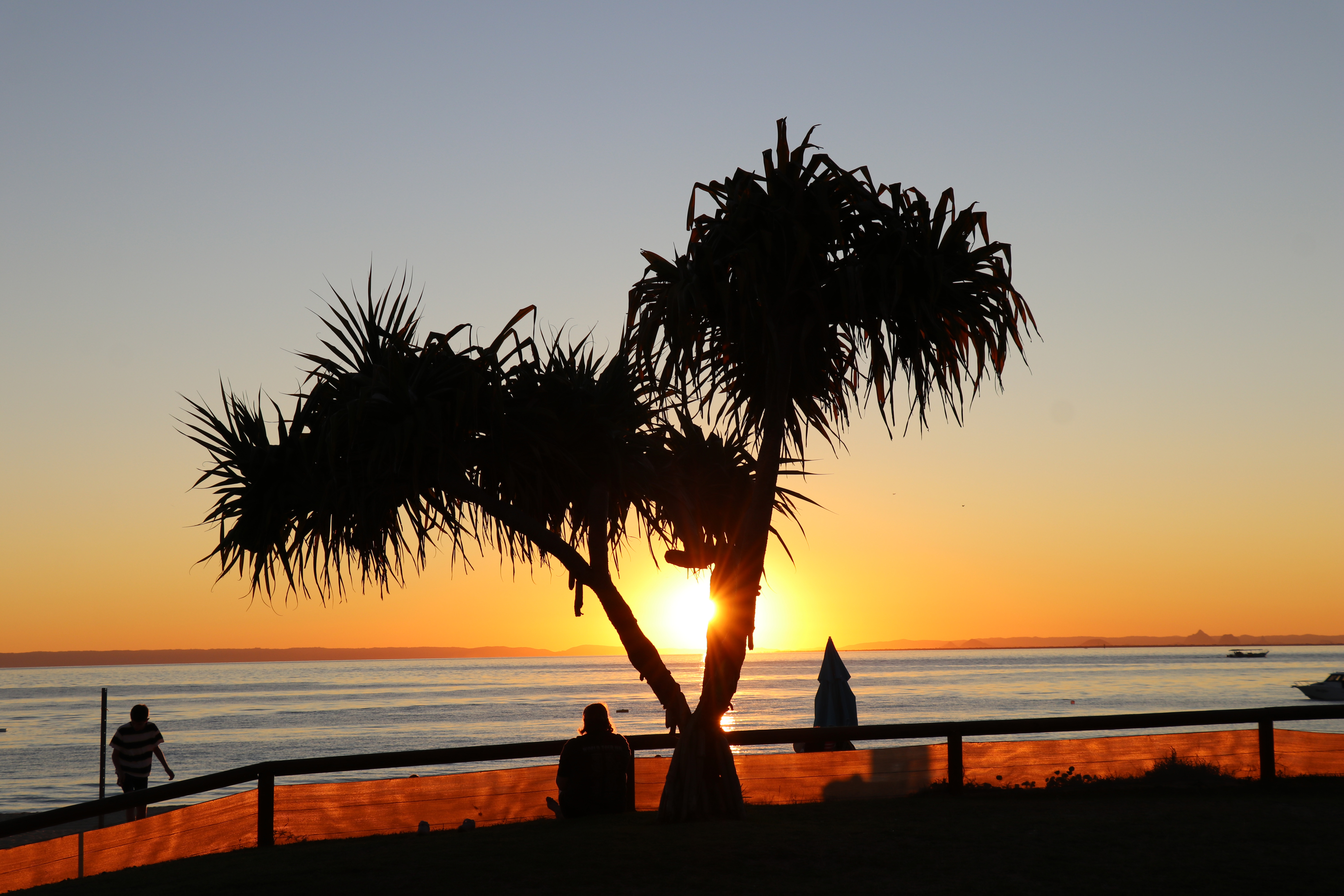
Cruise liners frequently drift by the resort and occasionally they moor offshore. Their hundreds of passengers descend on the island like hungry cormorants – and they are as noisy as flock sof seagulls outside a fish ‘n’ chip shop.
Caring for the land
Seagulls are pretty nasty critters – squabbling over land and water and food rights, dropping guano wherever they wish and being aggressive and noisy and quarrelsome and xenophobic. They are, in fact, much like the many humans who contribute tonnes of plastics to the ocean every year, who ignore signs proclaiming regeneration works on sand dunes and who simply just take what they want … and give nothing back.
Fisherman Island – part of the bustling Port of Brisbane – is home to an important shellfish restoration area and a shore bird roosting area. Scrubby bushes provide a vital link for millions of songbirds, raptors, shorebirds and butterflies to rest and refuel before continuing their journeys on to their wintering grounds. Bribie has been a protected area for many years and migratory birds from Siberia and Alaska call this place home for a short rest: Bar-tailed Godwits, Red-necked Stints, Pied Oyster-catchers, and Chestnut Teals.
- I’m not sure I’d like to be called a red-necked stint – or even a bar-tailed godwit …
The Tangalooma wild dolphin feeding program provides an opportunity for visitors to do the fish-slapping dance, but it also provides care and protection for the wild dolphins in their waters.
Coochie and Stradbroke Islands are experiencing serious erosion – from the action of heavy seas and from the heavy feet of people taking lazy short-cuts through sand dunes … but regeneration is happening on both islands.
Stradbroke also suffered for about five decades from the grasping operations of several sand- and mineral-mining companies gouging out rutile and other mineral sands. In their operations they destroyed many hectares of important wetlands and historic middens. Fortunately, the Queensland government passed laws in 2016 to stop such mining. In 2019 approximately 6400 hectares of land were returned to the ownership of the traditional First Nation owners.
First Nations
In the same way that Bombay and Madras have now returned to their earlier names of Mumbai and Chennai, many Australian places are tossing off their European-imposed names. In 1770 Captain Cook explored Australia’s east coast and named Stradbroke Island’s Point Lookout. He did not set foot on the island and was blissfully unaware that for millennia the Quandamooka people had called it Mulumba.
Stradbroke Island is now often referred to by its original name of Minjerribah, and the tiny island of Coochiemudlo is and has always been Coochiemudlo or “Place of Red Stone”. The vast area of Fraser Island is no longer referred to as Fraser, named in 1836 after Eliza Fraser, the wife of a Royal Naval officer. It is once again K’gari, or home of the Butchulla people.
In the arduous task of researching this article (hours of boat rides and gallons of gins and tonics), I visited five or six islands, and on Minjerribah I found the strongest First Nations influence.
- The stunning red, yellow and black Aboriginal flag flies everywhere, although on one flagpole it was twinned with the Palestinian flag, an obvious reference to the fact that some members of both nations feel that they have both been the subject of an unlawful invasion by a foreign power.
Minjerribah has several art galleries featuring works by First Nation individuals, and in one case – the Red Black and Yellow shop – all works are by members of the Coolwell family – whose son Jandarcan was on duty when I called in. The Saltwater Murris gallery with works by artists from the Nunukul, Ngugi and Gorenpul clans was closed when I visited, as was the Elders’ Council museum and meeting rooms. However, I am assured that if you visit at the right time you can join in cultural awareness tours, bush tucker walks and even have lessons in spear throwing.
I spoke to Chris, a Department of Education employee, who promotes ATSIAP: Aboriginal and Torres Strait Islander Aspirations Program. This splendid operation selects groups of high-achieving First Nation High School students and encourages them to participate in arts and cultural programs, to develop creative thinking skills through solving real-life problems such as health issues by using traditional healing practices. The students are linked with like-minded peers and encouraged to seek post-school tertiary aspirations.
- For further information contact atsiap@qed.qld.gov.au
For people who have lived on this continent for millennia, there is often a deep sense of reverence for local waterways, landmasses, trees and animals. On Minjerribah there is the vast brackish Brown Lake available for swimming to those brave enough to drive their vehicles over a car-eating potholed road. There is also the Blue Lake – or Karboora, meaning “deep silent pool” – and it is an area in the Naree Budjong Djara National Park, a place of special significance for the local Quandamooka people.

Artists
The Island Arts Gallery on Stradbroke Island / Minjerribah closed a couple of years ago … and its space has now been taken over by St Stradbroke – that most holy of saints – who apparently offers passers-by “Brews, Bagels and Bottles” as well as “Wine, Fromage and Coffee” …

On Coochiemudlo there is the small Coochie Artisan Gallery, but it is only open on weekends and public holidays. Also on Coochie lives an artist whose name is, I think, Toni, and who has created singular artworks out of old railway carriages and a superb painted cow.
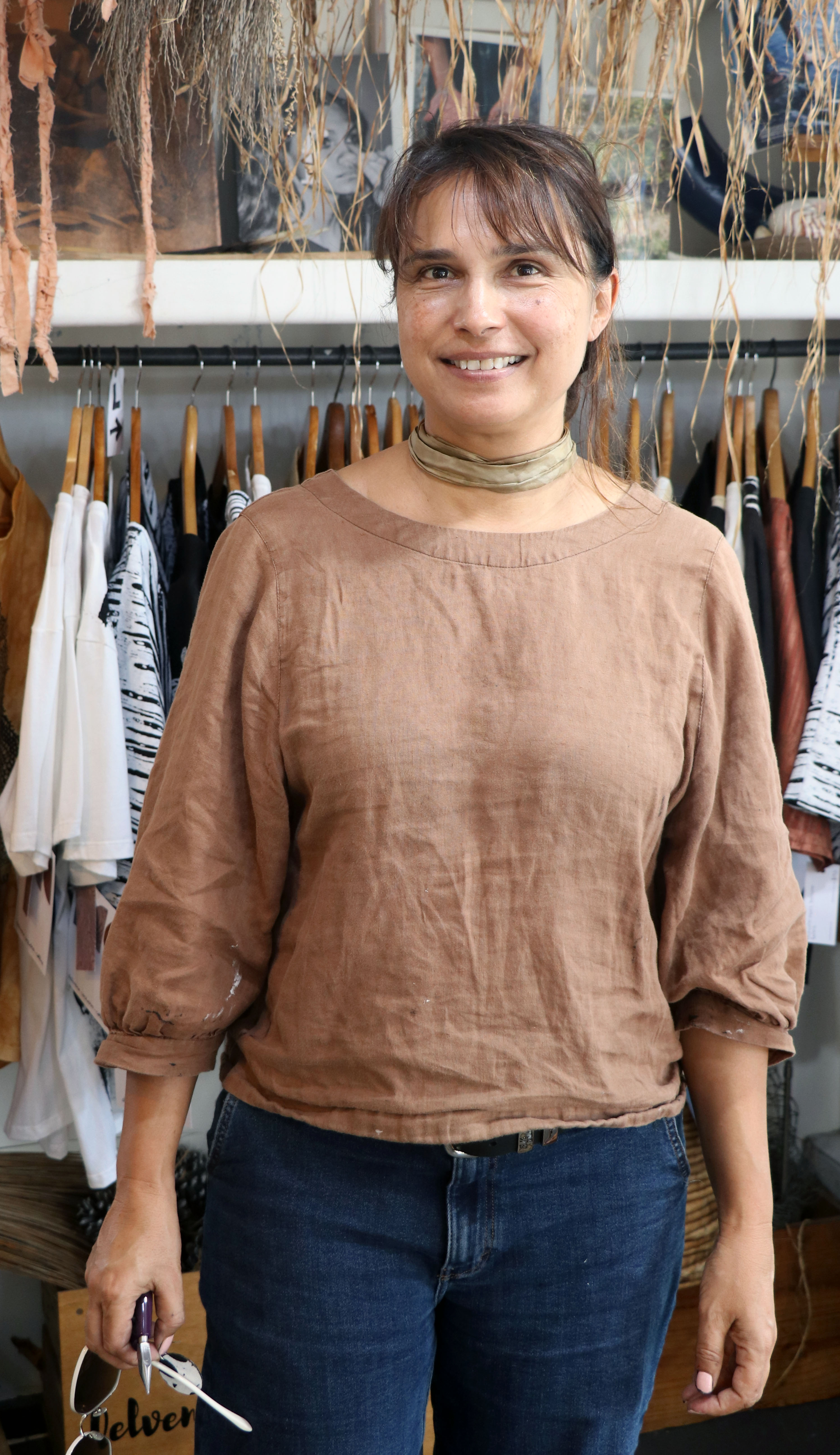
My first “meeting” of the marvellous Delvene Cockatoo-Collins was also on Coochie, where some of her artwork is featured on a sign where the Minjerribah Moorgumpin Elders-in-Council welcome visitors.
Delvene lives and works on Minjerribah and her work is featured in several locations on the island. She also exhibits and sells her work throughout Australia and in the USA. I was taken by her works on fabric – shirts, vests, cushion covers and table runners – and by her limited-edition prints, ceramics, jewellery and woven baskets. On her website (www.cockatoocollins.com) she states that her pieces:
- … share the stories, culture, heritage and techniques of thousands of years, passed down from generation to generation by her mother Evelyn and her grandmother Bethel.
One of her larger works is the Place Marker (a site where people gathered) at Mulumba (Point Lookout). Eugarie features huge pippi shells reminiscent of the middens showing where generations of people hunted and feasted.

Another Place Marker and almost the first thing visitors to Minjerribah see is a striking stainless steel and ceramic sculpture of a snake nestling its eggs in a curve of its body. Joshua Walker – artist and Quandamooka Songman – created the sculpture in 2022. It represents Kabul or the carpet snake, the totem ancestor of the Quandamooka people. Kabul is reputed to live in the depths of the Blue Lake.
You don’t have to be crazy to live here, but …
I spoke to several locals on Coochie (only 750 of them on the whole island) and was told that the quietness of the island once day-trippers have all gone is a real attraction. I thought they must be crazy to live on an isolated island:
- What happens if you have a medical emergency?
- Oh – there’s the fast ferry and also the ambulance helicopter. In fact, we could probably get to the Redland Hospital Emergency Room on the mainland faster than if we were living in Redland.
Okay … I think I understood, but the local Community Notice Board had a sign for a crystal healing cottage … as well as a sign for an island carpenter looking for work … and a sign offering a carpenter’s compound mitre saw for sale. Not quite paradise for that chippy, perhaps, and certainly not for the person whose rough camp I stumbled over at the far Western end of the island – a squalid tent and sleeping bag and a decaying fish on the foreshore …
Tangalooma perhaps could come close to paradise, but I fear for the mental health of the helicopter pilot whose day seems to be an endless loop of take-off, pop out over the bay, turn left, turn left again, turn left again over the beach and land. Take-off, pop out over … Perhaps there are several pilots who share the tedium of repeated shorts hops with camera clicking, idle-chattering unwashed tourists.
Perhaps you do need to be mad to live on Karragarrah. Despite its local popularity, this one-square-kilometre island speck has no permanent water, no shops, no schools, no traffic, no crime and only two hundred people. Hmm – is that paradise or hell?
On Stradbroke I found a sign attached to an old cottage:
- This building housed the incontinent inmates and was known as the foul ward

The Dunwich Benevolent Asylum operated on North Stradbroke Island from 1865 to 1946. It was established by an Act of Parliament in 1861 for:
- … those who because of age, accident, infirmity or otherwise were unable to care for themselves
However, a sign in the excellent local museum adds:
- This included the homeless, inebriates, epileptics, lepers, consumptives and other social misfits …
It seems that just about anyone could be sent off to the Dunwich “benevolent” asylum – a bit like Victorian England when unruly wives or naughty daughters could be packed off to bedlam just to get rid of them.
In 1901 there were over one thousand “social misfits” or “incontinent inmates” locked up, and a total of 8426 inmates died on the island and were buried in unmarked graves in the Dunwich Cemetery.
Walking
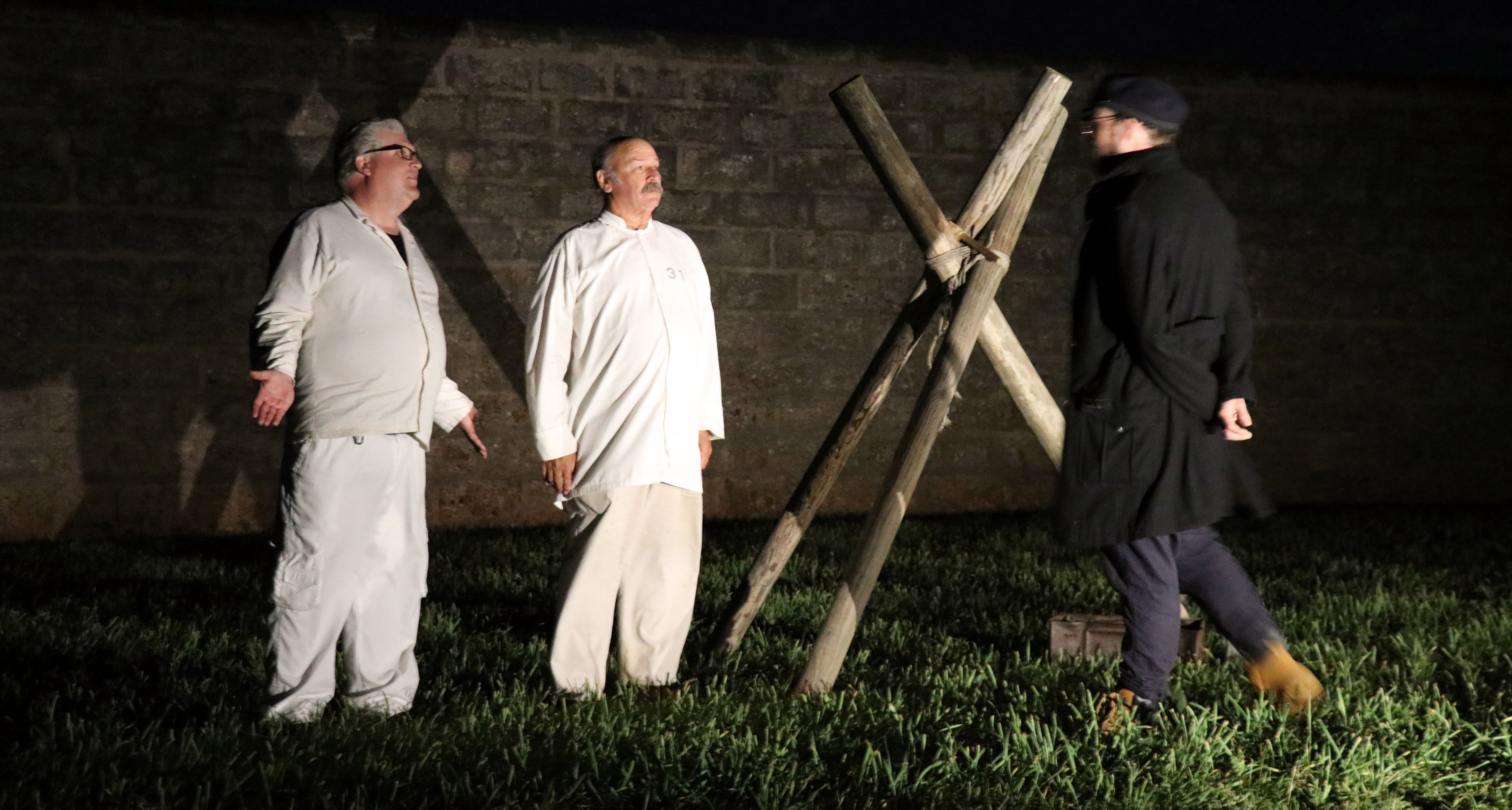
On some of the Moreton Bay islands visitors can join yoga classes, feed voracious pelicans, ride quad bikes up and down the dunes or go dune surfing or pile aboard 4-WD buses to take an easy look at nature … or they can just walk. St Helena Island offers a two-hour night walk through the old prison ruins as local guides / actors recount the terrible tales of the times.
I found the historic cemetery at Dunwich a fascinating place – but I always find old cemeteries fascinating places.
The Gumpi burial grounds were home to the thousands of “social misfits” mentioned before, but also to a handsome young man, Clancy S, who died when he was just twenty. Old Donald McLean from the Isle of Skye died here aged eighty-seven, and numerous young soldiers from various global battles are finally at rest here under the pine trees. Alan T died here when his plane crashed on the island and I liked the tombs of several locals – adorned with (now) empty bottles of beer and dried cans of Bundaberg rum and Coke.
Minjerribah offers the excellent Gorge walk, which is best started at the northern end (near the Cockatoo-Collins pippi shell sculptures). Travelling south, one crosses high above the North Gorge, with furious waves and spume spraying a hundred metres into the sky. Superb views across the Bay and the South Pacific Ocean lead walkers to the treacherous South Gorge (featured image, LEFT).
Before tackling 1.5-kilometre Gorge Walk, I had driven to the South Gorge and observed the laconic warning signs:
- Swimming Not Advised
- People Have Drowned Here
- Beach Closed – Do Not Swim
I clambered down the steep steps and across eroded sand dunes and could see why the signs were probably necessary … The waves were crashing on rocks in the narrow gorge, spume was spraying high in the sky and tree trunks were being sucked into a gobbling, grasping, greedy ocean that resembled a washing machine on its spin cycle.
- OK – probably will need my heavy-duty water wings before paddling out there …

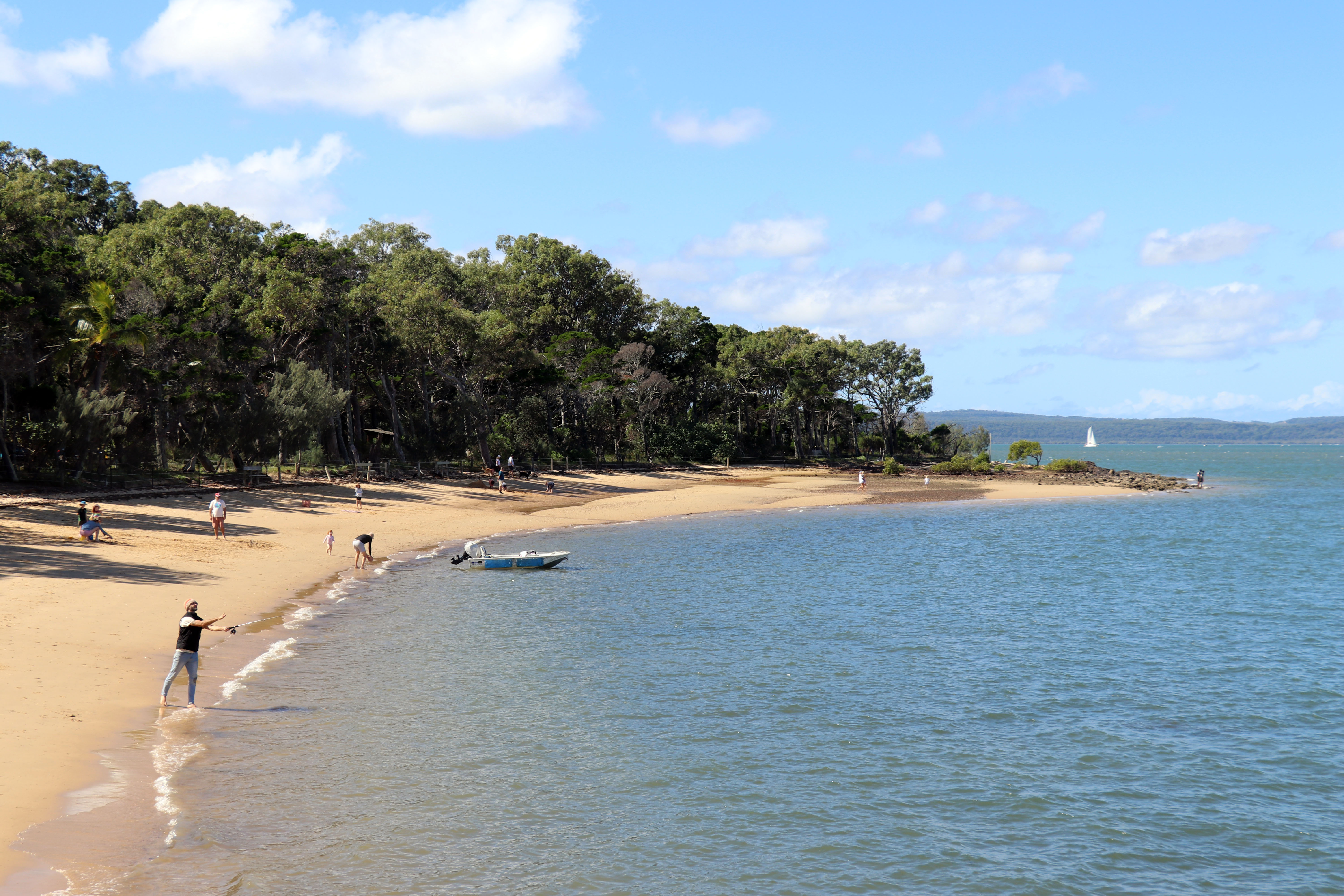
Walking along Main Beach at Coochie was a lot more sedate. This beach has wide golden sands and battalions of cobalt-blue soldier crabs scuttling across and below the wave-swept flats. Kids were probing with sticks to capture a crab or two, but I suspect that one would need a kettle-full of these beasties before a decent bouillabaisse could be concocted.
I do not think that any soldier crabs would survive a swooping aerial attack from the pelicans at Tangalooma on Moreton Island, but the kilometre-or-so walk north from the resort to the wrecks is a very pleasant way of trading the “civilisation” of the cocktail bars for the rusty enchantment of the dozen or so sunken ships. The ships were intentionally sunk between 1963 and 1984 to provide scuba diving and snorkelling and a safe harbour for sailing boats.

Eating
On many Queensland island resorts – such as Lizard Island and Qualia a bit further North along the Queensland coast – guests can enjoy fine dining with multi-course dégustation dinners served beside the beach. The cost of a room for one night at these resorts is about AU$3100 … so I’d guess the bread rolls with dinner would be complimentary.
On one of my island journeys I took my best resort wear, expecting to be required to dress for dinner.
On one island I was told:
- No shirt
- No shoes
- No dice! ie – no service
- Thongs are OK, just so long as the only thongs we see are the ones on your feet.
Another island told me that after 6.00 pm I did have to dress properly to enter the restaurant – but once again bare feet were not acceptable (thongs were OK) and that singlets were acceptable only if tucked into the wearer’s Stubbies – brief shorts, rather than squat beer bottles.
- I was glad I had left my Priscilla Queen of the Desert outfit at home
So fine dining is not much of an option on Moreton Bay islands, and it is indeed pretty hard to find food that is not all deep-fried in cooking oil – perhaps a consolation is that the oil is probably not rendered humpback whale blubber.
However, I enjoyed the oysters and the pork belly while overlooking Skirmish Passage at the Surf Lifesaving Club on Bribie Island, and at the Little Ship Club on Stradbroke I had a nice piece of grilled barramundi. Delvene Cockatoo-Collins recommended the prawn and ginger dumplings at the Stradbroke Sharks Football Club – I will save that recommendation for my next visit to the island.
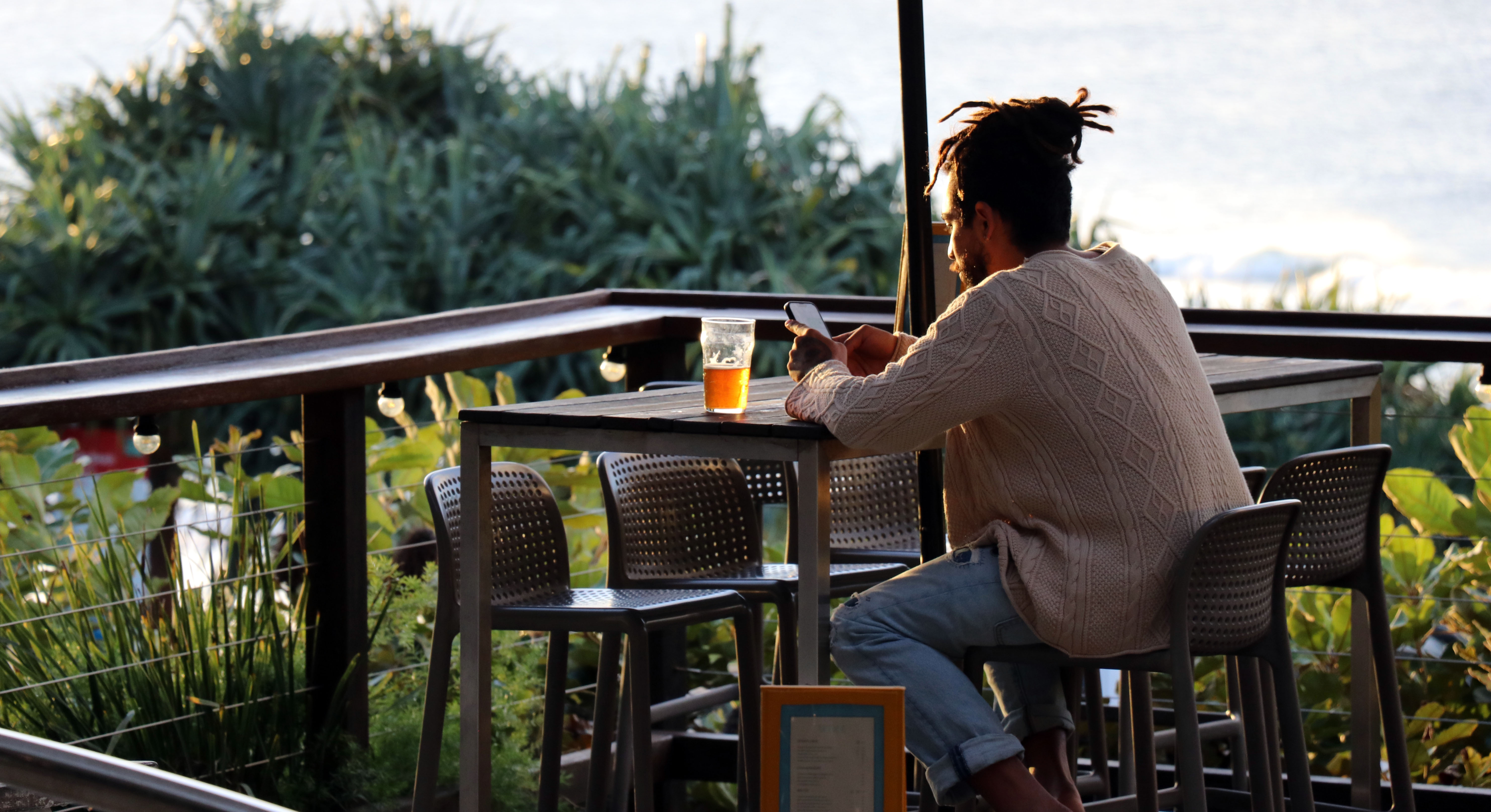
At the Beach Hotel also on Stradbroke I enjoyed a rib-eye fillet with an excellent wild mushroom sauce while watching the sun set over the ocean and lighting up a man with dreadlocks sipping a beer on the balcony.
Coochie offers the Island Beach Bar and Grill where the beef burger (with additional bacon and cheese) is sensational, and there is also the option of the Curlew Café and perhaps the Oasis Restaurant, although I think the latter is now closed. Coochie also offers pretty little gazebos scattered along the beach with free electric BBQs for visitors who bring their own steaks or sausages or who, following the time-worn advice of Paul Hogan, simply want to:
- Toss another shrimp on the barbecue
Tangalooma has a range of eating places – some of which visitors share with strutting and glaring and highly indignant hissing and cussing curlews. By choosing carefully one can avoid the deep-fried offerings at this resort. I had some wonderful and very traditional oysters Kilpatrick, a lovely lemon-thyme chicken breast and a sizzling garlic chicken and cashews at the Fire and Stone restaurant.
I do enjoy fine dining and six-course dégustation dinners … but I also enjoy the simple things. At the little Departure Café before boarding the ferry to Stradbroke, and in the excellent Sea Breeze ferry café on the return journey, gourmets can find age-old traditional savoury mince toasties!
I had two.
Fisherman Island
Fisherman is one of a few islands that can be reached by road and is predominantly occupied by the Port of Brisbane.
This “island” is connected to mainland Queensland by several other little islands and bridges and highways and railway lines. It is theoretically an island but in realty just an extension of the mainland. The Port of Brisbane is a vast operation, each year handling international cargo of $50 billion and is the place where 95% of all imported vehicles arrive.
On my first visit I saw mighty phalanxes of Toyotas, Mitsubishis, Isuzus and Honda cars lined up beside cohorts of KOMATSU front-end loaders and MAN trucks.
It is a place where acronyms abound: QUBE, MEDLOG and ACTS all butt their meaty shoulders with other behemoths including DP (dunno) and PATRICK whose control tower is the tallest structure in the area.

Aeroplanes from Brisbane airport scoot overhead. Cruise liners and container ships line the shores, tended by giant red praying mantis-like cranes. Tens of thousands of containers line the shores and are stacked on patient and willing ships. I am sorely tempted to use the word “LEGO” to describe all these containers but will settle for multicoloured building blocks tossed down by some petulant giant child.
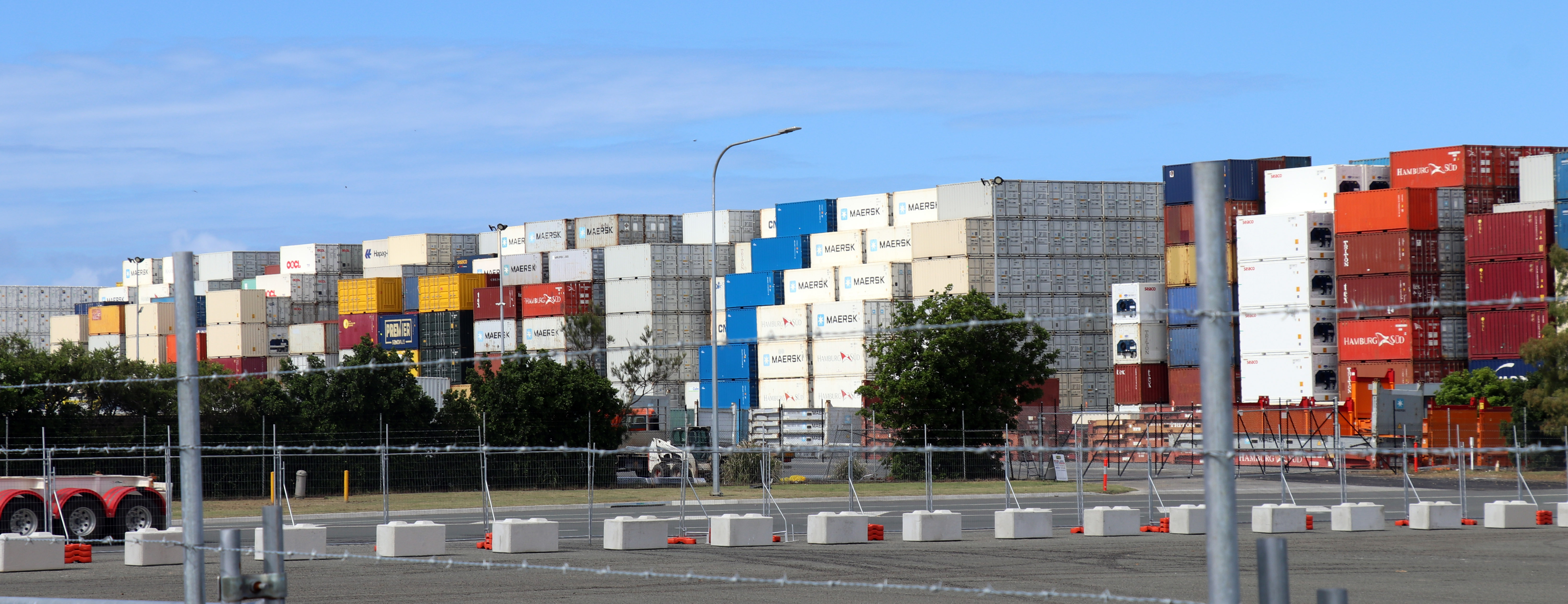
Despite the majesty of the vast ships and the multitudinous multi-coloured containers scattered around, and the frightening road-train three-trailer trucks lugging containers from here to there and just a few inches from my tiny little white car, the thing I loved most about my visits to the Port of Brisbane on Fisherman Island were the magnificent wind turbine blades.

About fifty metres long, these elegant creations would stand proud in any modern art or modern sculpture garden.
It is said that wind turbines disrupt avian migratory routes and that they kill birds and interfere with brain waves of imbeciles below wearing their tin-foil caps to prevent radiation damage – but – Oh! How splendid the individual blades are and how striking and how majestic these structures are … and how effective they are in reducing green-house gasses.
Island dreaming
I loved how some of the original First Nation names are now becoming more customary for the islands and how the colonial-imposed names are being dropped.
I loved the wild waves crashing on unforgiving rocky steep-cliffs beetling their brows over the North and South Gorges at North Stradbroke, and the respect paid to First Nations artists – and people in general – on that island. I loved seeing kids chase blue soldier crabs on Coochiemudlo Island. The beautiful wind turbine vanes on Fisherman Island were works of art and strolling just a few metres across white sands at Tangalooma and plunging into the clear oceans was a delight – if a rather chilly one at that.

I loved the many kilometres of wild deserted golden sandy beaches that beckon walkers on Stradbroke, Coochie, Bribie and Moreton Islands and was sorry that my old legs did not allow me to explore them more fully. I loved the conservation works – against coastal erosion and against wildlife habitat destruction I found on every island … and I guess I loved the intimate relationship I developed with Echo, the bottle-nosed dolphin, during my thirty seconds of fame with him …
On Bribie I was appalled by the horrid McMansions: do you want an air-conditioned wine cellar with that? Or perhaps a Jacuzzi fitted to the stern of your motor launch …? These vulgar dwellings were crowded shoulder to shoulder, with tall fences linking every pretentious house occupying the maximum footprint on tiny blocks of land and ensuring that visitors could not even catch a glimpse of the ocean waters. I was also disturbed by the lack of street signage to guide visitors through those parts of the island:
- If you don’t know where you are you probably can’t afford to live here … so bugger off please
Bribie also had the most welcoming staff – at the Visitors’ Information Office, and at the superb Seaside Museum with its excellent history of early explorer Matthew Flinders and his First Nation companion Bongaree, after whom the location is named – and the least welcoming staff at the Community Arts Centre:
- Photography of any kind is forbidden here …
- But photography is permitted at the Louvre, the Prado, London’s Tate Gallery …
- Sorry – don’t care – no photos!
I did not like the drunken visitor to the excellent St Helena Island Cat o’ Nine Tails travelling theatre presentation who jumped up and interrupted one of the little scenes:
- This is all sh*t! Where is the ferry? I’ll go back there and wait for all this sh*t to be over
At first we all thought he was part of the theatre … but then realised he was just a drunk … and saw him off with suitably fond farewell greetings:
- Prrrrbh! (… not sure how one spells a Brooklyn raspberry …)
………..
I am sure the many Philippine and Thai islands have a huge range of marine life and resorts and sunset cocktails and parasailing opportunities. Some of them may even share our horrid history of penal colonies and whaling stations and lunatic asylums and Imperial explorers “naming” already named maritime and island settlements and geographical features.
I’d like to go back to Tangalooma to scuba dive on the wrecks and I’d like to spend more time with Delvene Cockatoo-Collins to explore her artistic vision and perhaps to learn some of her screen-printing techniques. I’d like to be able to offer some sort of support to the poor bugger living rough on the western end of Coochie … and I’d like to be one of the performers of the Cat o’ Nine Tails theatre group shocking and surprising visitors to St Helena and saying “Prrrrbh!” to any unwelcome yahoos.
……………………………………..
Journeys May 2024
Text and photographs © Christopher Hall May 2024
Location map, additional information from the Internet
…………………………………….
If you enjoyed this story please scroll down to see earlier stories and forward the blog address to your friends: www.hallomega.com
If you would like to receive automatic notification of future postings on this blog please click the FOLLOW button on your screen.
……………………………………..
In my blogs I try to present a snapshot of the places I have discovered during a brief visit. I am not trying to present a detailed picture of the whole city or the whole region or the whole country.
……………………………………..
If a man ascended into heaven and gazed upon the whole workings of the universe and the beauty of the stars, the marvellous sight would give him no joy if he had to keep it to himself. And yet, if only there had been someone to describe the spectacle to, it would have filled him with delight.
- Attributed to Marcus Tullius Cicero – On Friendship
……………………………………..
 hallomega
I had no idea there were quite so many islands in the bay. It will take you a few more years to visit them all. 😊
LikeLike