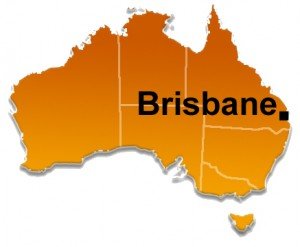
Pre-European Australia is very old country with indigenous peoples tracing its waterways and mountains and shores for thousands of years. The same shores and waterways attracted settlers from the other side of the world – nope – that is not quite right.
Because the place was so isolated and so apparently unpopulated, Britain thought the place would make a great prison colony and sent many of its offenders here: those who stole a loaf of bread or a few shillings and those who cut down a tree in an orchard to get food.
In 1824 thirty or so of these heinous criminals, along with a few soldiers and guards, arrived in what is now known as Redcliffe, a few kilometres north of the modern city of Brisbane.
Two hundred years of European settlement – or invasion as some would have it – have changed things considerably, and some of the old buildings from those earliest days are still here.
The Old Windmill 1824
The oldest European building still standing was a bit of a failure.
Built by convicts in the 1820s, the windmill (see featured image, LEFT) is located on a hill high above today’s city – but surprisingly a hill where there was very little wind to drive the vanes to mill the corn for the early settlers. The colony’s Commandant at the time, a harsh and sadistic man named Patrick Logan, found that a lack of wind was no reason for the mill not to produce flour. Who needs wind when you have prisoners?
The image below from Wikimedia Commons shows a treadmill at London’s infamous Brixton gaol at about the same time and it is fair to guess that the Brisbane treadmill was closely modelled on it.
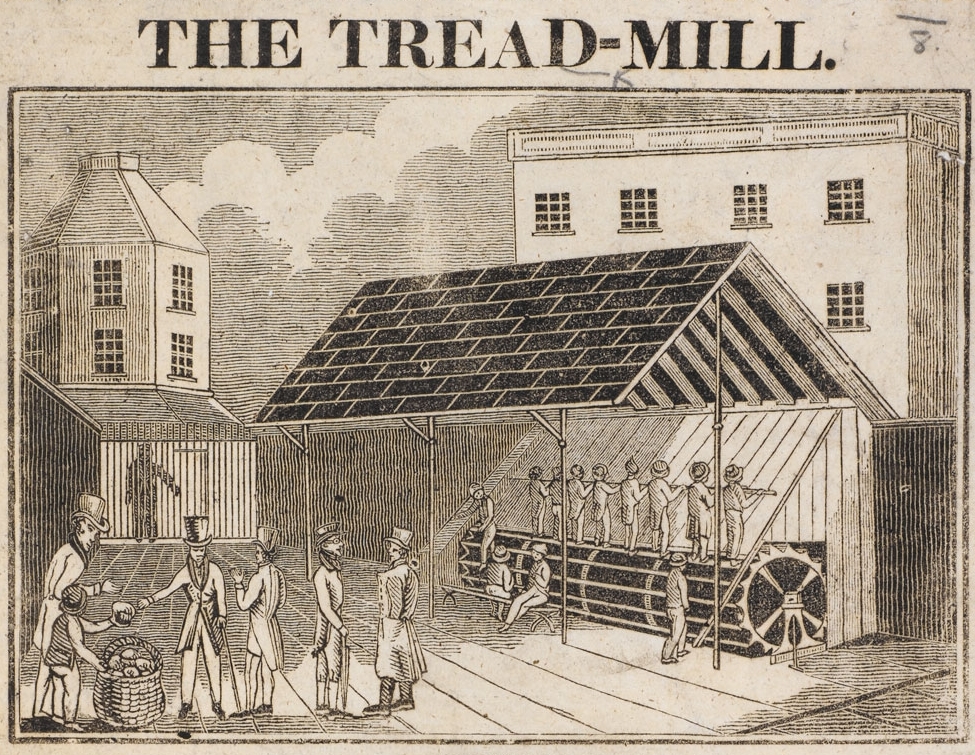
The human hamsters trod those boards for about fourteen years, from 1828 until the mill was closed in 1842.
Later uses of the “windmill” were as a signal station and observatory with a time ball on top of the structure that allowed the people of Brisbane to re-set their watches at 1.00 pm each day when the ball came booming down. I don’t know why noon was not chosen … and I suppose a ball clanging in the distance is more environmentally friendly than a noon-day cannon.
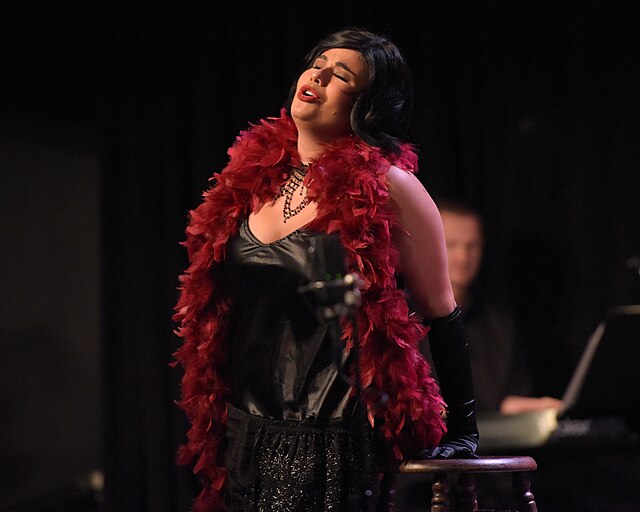
A nearby sight all too easily overlooked is the large corrugated iron roof next to the mill. While a bit of an eyesore, the roof covers the former Spring Hill Reservoirs, once Brisbane’s principal water supply. Following the decommissioning of the reservoir in 1960, it was magically transformed into an underground theatre where the Underground Opera company performs regular concerts of opera, Broadway musicals and, coming up, a series of Christmas Carols deep underground.
Commissariat Store 1828

Just about everything coming into Brisbane – food, grain, weapons, ammunition, tools, machinery, clothing and perhaps even livestock passed through the doors of the Commissariat Store, built, like the windmill, by convicts. The commissariat at that time was on the banks of the Brisbane River but is now separated from the river by numerous fly-over highways and only tiny glimpses of the building can be gained by travellers aboard a river ferry.
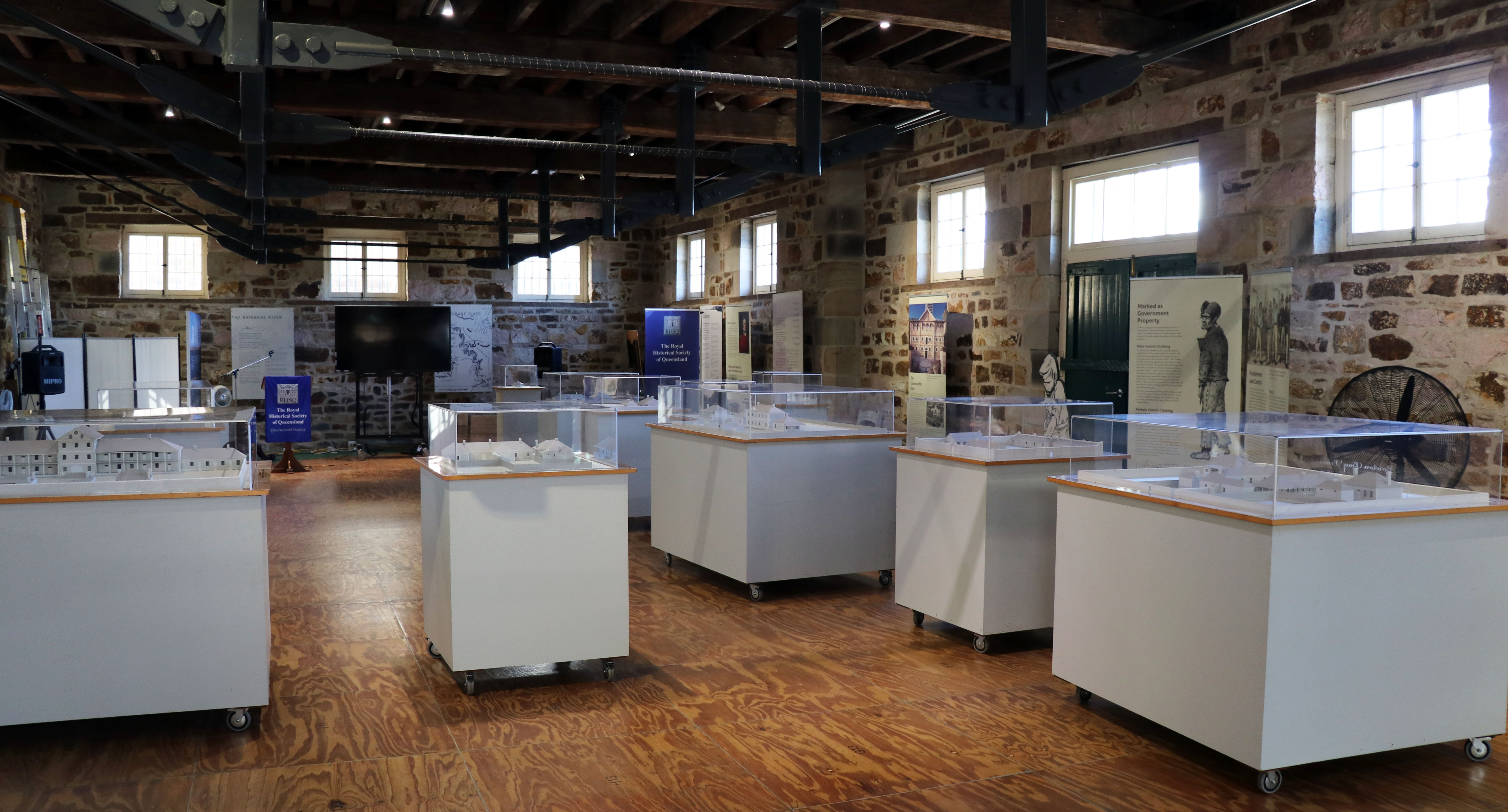
The building now houses an interesting museum of the colony’s early history with replicas of Brisbane’s buildings from the early Nineteenth Century. Volunteer guides are full of interesting titbits and keen to share their heritage with interested historians or travellers.
Displays in the museum show that the convicts were not only a source of masons and builders. They were also useful for pulling ploughs and other hard manual labour for which cattle could have been used – but again – why use animals when you have convicts.
It is worth remembering that very serious offences in Britain were usually dealt with in that country. Many other criminals were sent to Australia – to Van Diemen’s Land, to Sydney or to Brisbane – to relieve pressure on British prisons. Transportable offences apparently included the theft of an item under one shilling in value, setting fire to underwood, stealing fish from a pond … or for impersonating an Egyptian …(1)
There are gruesome tales of harsh penalties for erring convicts or indignant First Nations people whose lands had been arbitrarily barred to them. The Commandant had ordered an eighty-kilometre exclusion zone and any aboriginal person entering this zone to hunt – or to plunder – was dealt with severely. Two were hanged from the windows of the Commissariat for murdering penal guards.
Newstead House 1846
There were never too many Egyptians at Newstead House, the oldest European residence in Brisbane. Home to several noted early settlers, in particular the Harris family in the 1860s – 1890s, the building has recently been restored and re-furnished in the style of the late Nineteenth Century.
Its location, in beautiful grounds on a bend of the Brisbane River, gives it superb river views towards the modern city. More importantly it is just a few minutes’ walk away from the Saturday morning sausage sizzle at the nearby Bunnings Warehouse.

Of the many splendid trees in the grounds is one known as The Old Fig Tree – estimated to be over 200 years old. When Captain JC Wickham RN was resident, his coachman used to park his master’s gig under the tree. When I visited the house recently, the tree was giving ample shelter to a splendid gleaming black Rolls Royce Phantom VI [2], the set of wheels being used by Her Excellency the Hon Dr Jeanette Young, twenty-seventh Governor of Queensland, who was attending the official reopening of the house. There were one or two other people there, as well as Jeanette and me.
The interiors have some nice period furniture and fittings, but it is all considerably pared back from the High Victorian clutter that the house would have offered during its official lifetime. I particularly liked the excruciating-looking women’s boots in one of the bedrooms.
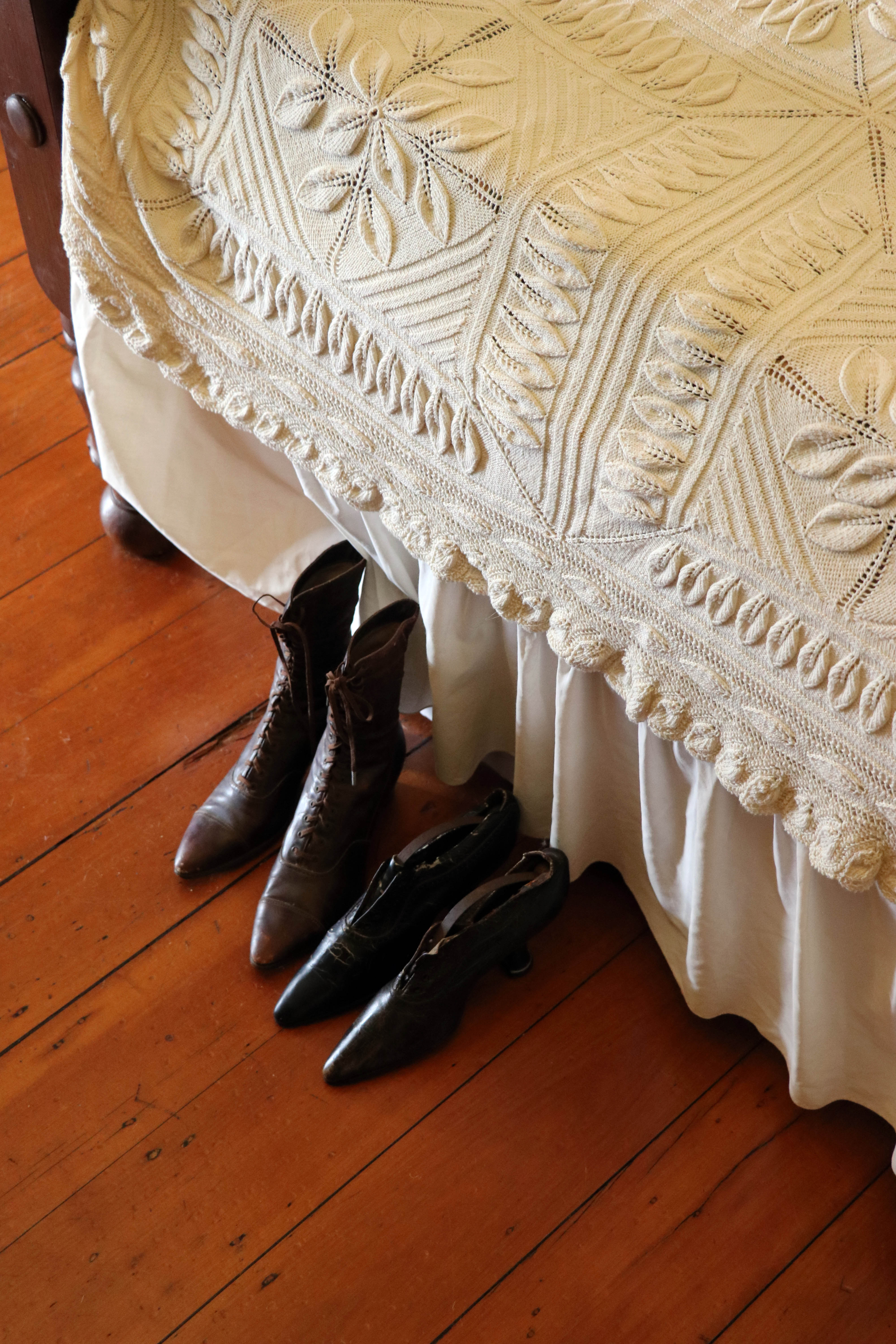
- And I used to think that it was only the Chinese who bound their women’s feet …
Parliament House and old Government House
Tucked away at the top end of George Street in the city, adjoining what is now the Queensland University of Technology (QUT) , is a lovely trio of interesting buildings dating from 1860 – 1889. Each of these also gives access to the superb City Botanical Gardens nestled in another bend of the Brisbane River.

Government House – the residence for the first Governor of Queensland – was commenced in 1860 and completed a couple of years later. It was built in the Greek Revival style, and featured locally sourced bricks and sandstone, but just about everything else was imported from Britain: chandeliers, carpets, furniture … and electric toothbrushes. The latter were driven by dynamos powered by the convicts.
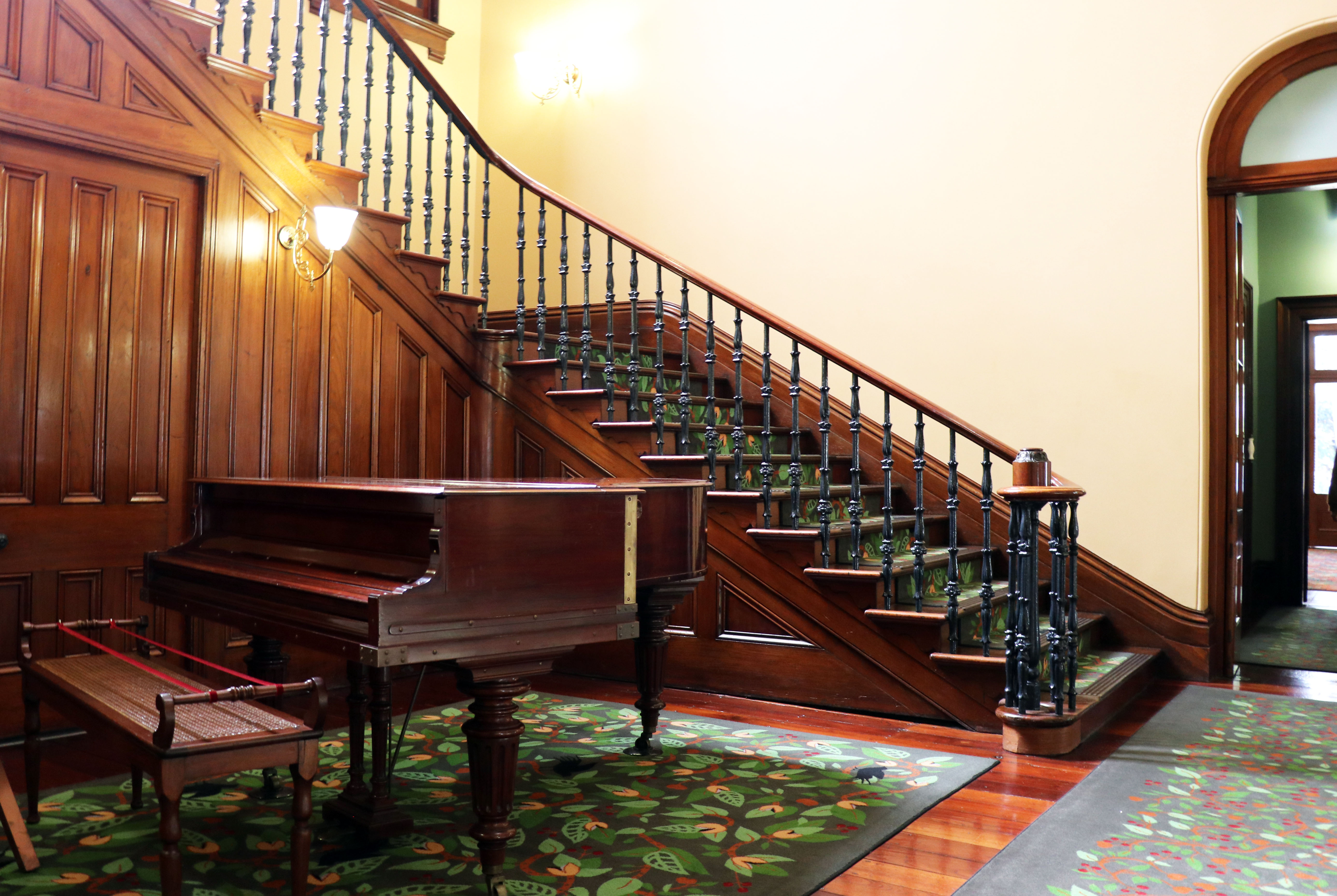
The staircase handrail and the piano in the photograph above are originals but the strikingly modern carpet is a 2009 addition. I could not find out who made it or who designed it, but the design elements feature Australian flora and fauna – gum trees, lilly pilly flowers, grevillea seed pods and striking black crows – so it is nice that there is some Australian element in this building.
The house was both a private residence and a venue for official State functions. Visitors today can visit the various state rooms and grounds, and there is a lovely small restaurant – cleverly called The Kitchen as it is located where the original kitchens were sited – and a private courtyard for a refreshing cup of tea and perhaps a pumpkin scone or two.
Before your afternoon tea, however, seek out the Back Stairs – or Female Servants’ Staircase. This is a perilously steep and narrow stairway used by the servants to ferry up the bed warmers and to ferry down the used chamber pots.
Completion of the house cost about GBP 17,000 – or just over AUD $5.2 million in today’s money … so it was quite a quaint little cottage and I am sure quite comfortable digs for all those who sailed in her.
Parliament House 1865
I’m not sure what types of scones are served in the Members’ Dining Room in Parliament House but it too features masses of “stuff” imported from Britain. I do not know why there were not sufficiently capable convicts to build a staircase … but perhaps the huge stained glass window of Queen Victoria would have had to have been a special commission lest one was not amused …

Tours of the lovely old building are offered but photography anywhere other than the grand staircase (imported from Britain) is prohibited. I imagine this restriction is to stop people taking selfies with dozing politicians.

My third little find in this area is an 1889 row of six terrace houses called The Mansions – cleverly guarded by a stone cat perched precariously on the rooftop at each end of the building. Look carefully at the area just above the ONE WAY sign. Built during a boom period in Queensland’s early history, the terraces offered luxury accommodation to wealthy private citizens, to Members of Parliament, and to professionals such as doctors. Over the years the buildings have also housed specialty shops, a restaurant and government offices, and have been the subject of much renovation – and a not inconsiderable amount of political manoeuvring.
Holy Triad Temple 1886
A small Buddhist temple tucked away between two other temples – a temple of drinking and a temple of gambling (aka the Breakfast Creek Hotel and the Albion Park Racecourse) – was built at the end of the century to serve the religious needs of the large numbers of Chinese living and working in the area providing much of the fruit and vegetables needed by settlers.
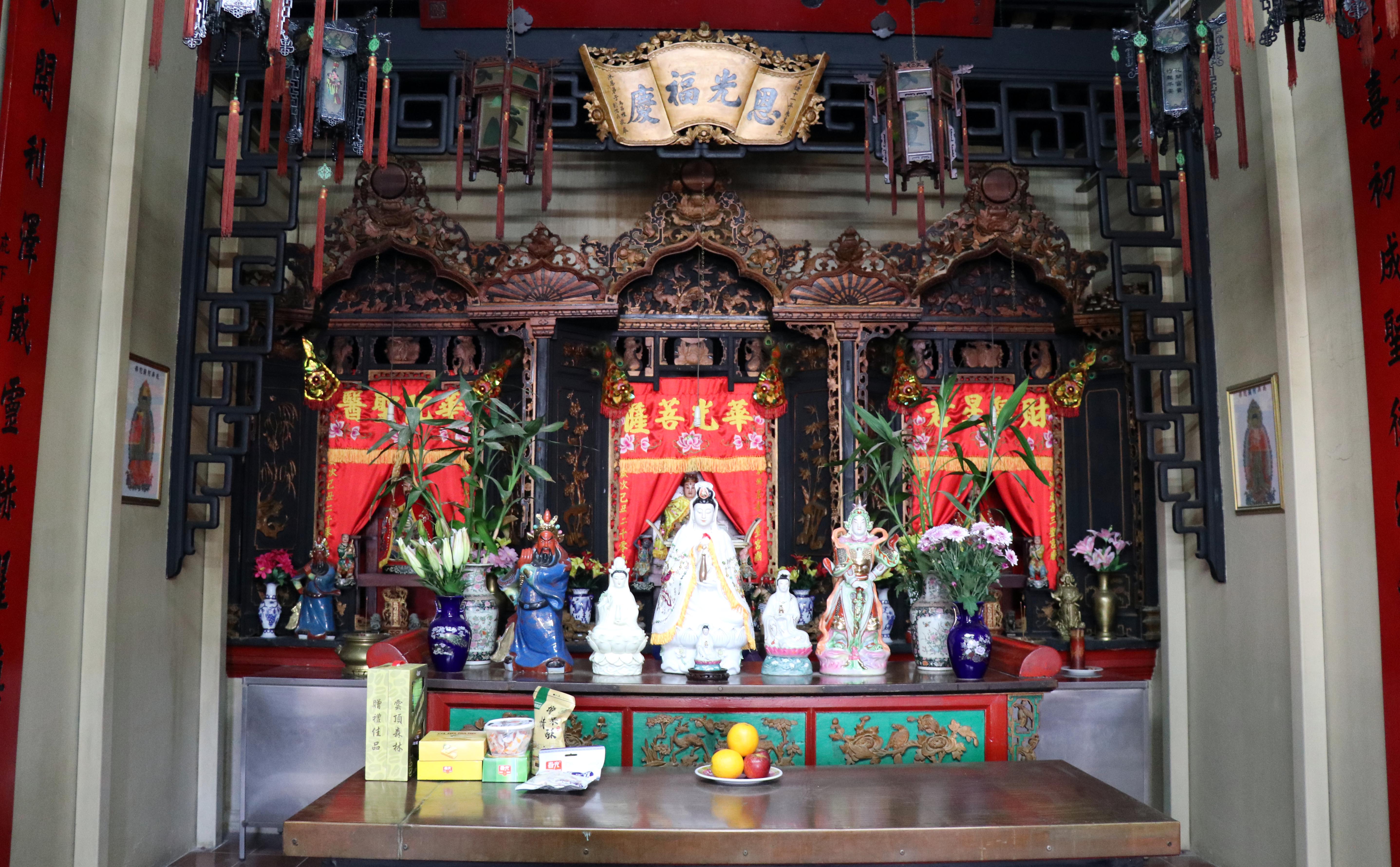
Like a cute miniature version of much larger Cantonese temples in places such as Hong Kong, it is richly decorated and has a strong smell of incense. There were only three worshippers when I visited – I counted the three pairs of shoes at the door before I entered, and they were adding to the drifting clouds of smoke necessary to attract the attention of the deities.
Brisbane Powerhouse 1920

Yes – I know – it is stretching it a bit to think of something that is just a hundred years old is a bit of “old Brisbane”, but to my nephew and niece and people of their age, I am also a part of “old Brisbane” and the Powerhouse has many decades on me … so, yes … let’s call it a bit of old Brisbane. In any case it is very much alive and kicking and throbbing and screaming.
- Come to think of it – that sounds like a typical day in today’s Parliament House
The building was used to generate electricity for nearby suburbs and for the extensive and wonderful tram system Brisbane used to enjoy. I remember as a very young boy being allowed for the first time to travel by myself on the Clayfield tram from my grandfather’s house into The Valley to shop at McWhirter’s Marketplace for a new glove puppet. Yes – I am that old!

A brutal steel girder and red brick and exposed concrete behemoth, the powerhouse took on coal delivered from river boats and trains. The coal was burned producing steam – and plenty of pollution – that powered generators. From about the 1970s trams were sold off and the building started falling apart. It was a great place for illicit parties, graffiti artists, locations for illegally shot short films and also even used as a training ground for State Emergency Services in the gentlemanly arts of smashing down walls and doors.
In 1994 it was reopened – a revitalised and dynamic space with several theatres, exhibition spaces, bars, restaurants and performance areas. It plays host to hundreds of different live theatre or music or circus or comedy events each year. Mary Mae’s Kitchen is a delightful space right on the river’s edge, just a few hundred metres upstream from Newstead House.

On my last visit the World Press Photo Contest was on display and the forecourts were being used for a glamorous photoshoot. The graffiti is still there, as are many of the old steel beams and exposed brickworks and a few electrical bits and pieces and switches and doovers.
……………………
Old Brisbane?
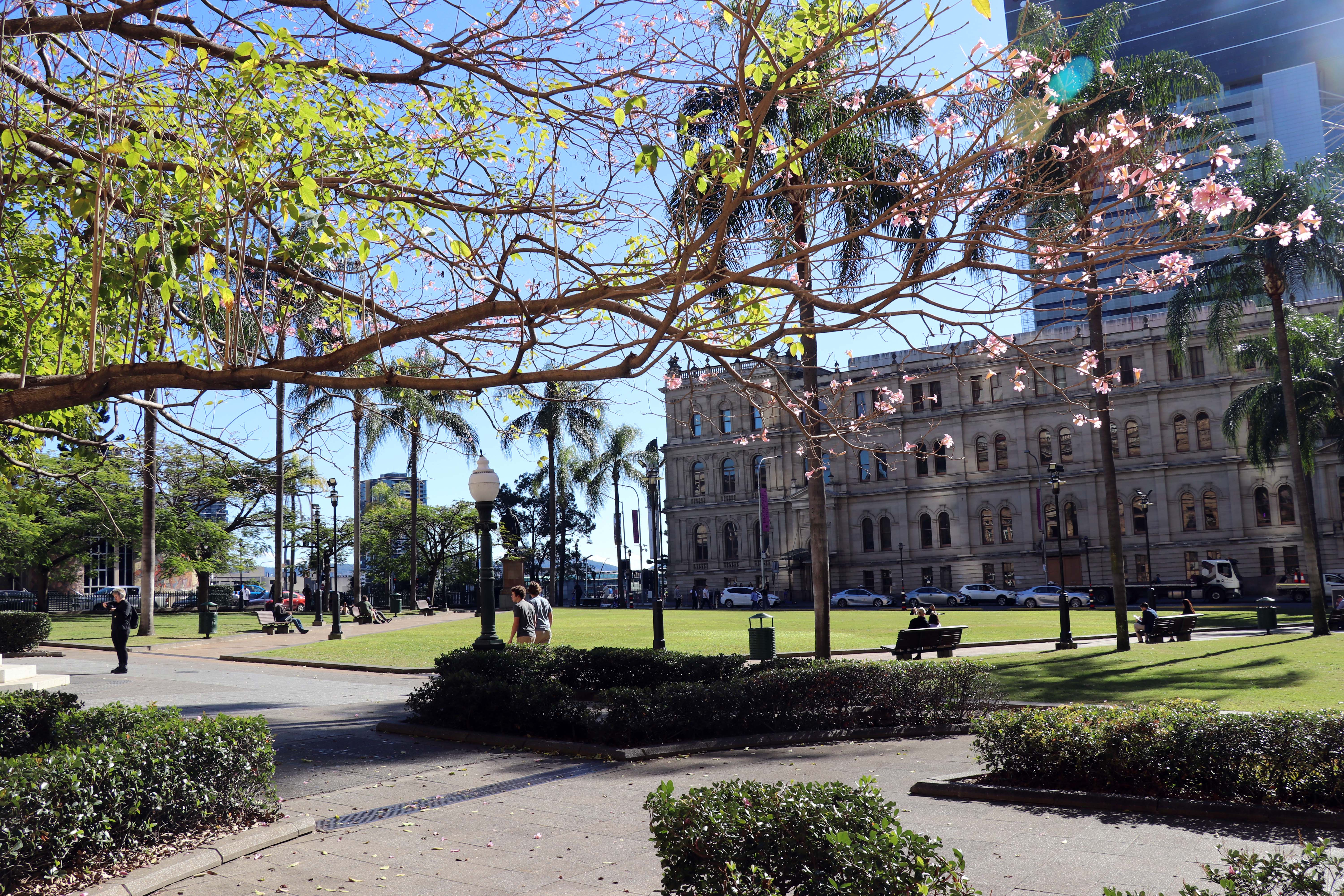
Everything is relative of course: European settlement in Australia first occurred in 1788, just two and a half centuries ago. Asia and Europe have buildings dating back thousands of years and draw on a history far older than Australia’s. So we can celebrate and take pride in some of our “old” places, even though by European standards, they have yet to reach puberty or to start shaving.
……………………
Notes
- British Government Egyptians Act 1554 – Wikipedia
- I think it was a Rolls – but it might have been a Bentley or a Daimler. The Government House website says that Jeanette slums it in a Roller. Ironically both the Rolls Royce and Bentley marques are now German-owned – by BMW and VW respectively. Daimlers, on the other hand, are owned by Jaguar / Land Rover … so perhaps she was more loyal and had a Daimler. Although the Jaguar and Land Rover brands are now owned by Tata Motors of India …
……………………………………..
Journeys July and August 2024
Text and most photographs © Christopher Hall May 2024
Australia map, opera and treadmill photographs Wickimedia Commons
Location map, additional information from the Internet
…………………………………….
If you enjoyed this story please scroll down to see earlier stories and forward the blog address to your friends: www.hallomega.com
If you would like to receive automatic notification of future postings on this blog please click the FOLLOW button on your screen.
……………………………………..
In my blogs I try to present a snapshot of the places I have discovered during a brief visit. I am not trying to present a detailed picture of the whole city or the whole region or the whole country.
……………………………………..
If a man ascended into heaven and gazed upon the whole workings of the universe and the beauty of the stars, the marvellous sight would give him no joy if he had to keep it to himself. And yet, if only there had been someone to describe the spectacle to, it would have filled him with delight.
- Attributed to Marcus Tullius Cicero – On Friendship
……………………………………..
 hallomega
love the old treadmill!
LikeLike